Home » DDEA » Ugandan Researcher Highlights the Realities of Type 1 Diabetes Care in Low-resource Settings
Ugandan Researcher Highlights the Realities of Type 1 Diabetes Care in Low-resource Settings
Posted on 09.06.2026
“Many families still see type 1 diabetes as a curse”
In Uganda, the challenges surrounding type 1 diabetes extend far beyond access to insulin. According to Ugandan researcher Wenceslaus Sseguya, PhD, MSc, families, healthcare workers and health systems all face major structural and social barriers such as stigma, fragmented data systems and limited healthcare capacity that continue to affect care for children and young people living with diabetes.
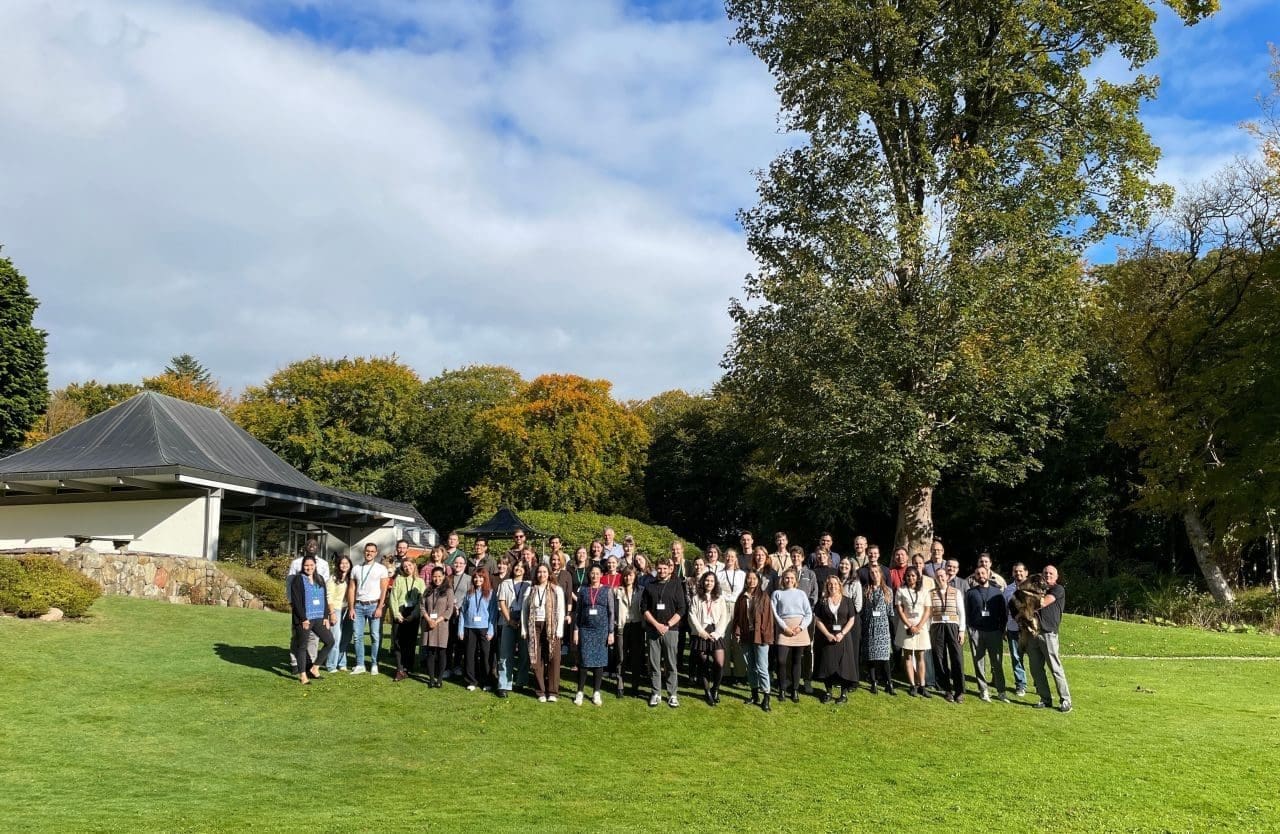
Wenceslaus Sseguya, PhD, Msc, is part of the Early-Career Researcher Network on Type 1 Diabetes, an international initiative that brings together early-career researchers from low- and middle-income countries to strengthen collaboration, build research capacity, and improve the use of data for better diabetes care.
Video: Watch Wenceslaus Sseguya discuss diabetes data systems, healthcare access and the realities of type 1 diabetes care in Uganda.
“Many families still see type 1 diabetes as a curse or evil doing,” he explains. “Some believe it can be cured through spiritual or traditional means. For others, the fear that the child may suddenly die overnight makes them view the child as a liability. This creates stigma and isolation.”
Wenceslaus is attached to St Francis Hospital Nsambya in Uganda, where he works in diabetes care research and has participated in guideline development across East Africa. His own journey into diabetes care began through his work on contextualised diabetes nutrition education and information after his undergraduate training in nutrition and dietetics. Since then, he has remained engaged in improving diabetes care capacity in Uganda.
Fragmented Data Systems Create Additional Burdens
Photo: Wenceslaus Sseguya, PhD, MSc, at the Type 1 diabetes camp in Northern Uganda.
One of the major themes highlighted in both the interview and the accompanying video is the challenge of fragmented healthcare data systems.
Healthcare workers are often required to enter the same patient information multiple times into parallel systems, creating both workload and data quality challenges.
“We have multiple data systems that a health worker has to work with,” Wenceslaus says. “They end up entering data most likely three times. That affects data adequacy and accuracy.”
According to him, stronger and more integrated diabetes registries are urgently needed:
“We need one single data registry that is rich, adequate and accurate.”
Significant Rural-urban Disparities Remain
The interview also highlights large differences between urban and rural diabetes care.
In rural areas, access to emergency care, diabetes education and trained healthcare workers remains limited. Wenceslaus explains that mortality is often higher in rural settings because families may not recognise symptoms early, know how to respond to emergencies, or have access to equipped emergency centres.
At the same time, many diabetes programmes remain heavily donor-supported, raising concerns about long-term sustainability.
“The government’s capacity is not yet fully ready to take over those services,” he says. “Health financing is still limited.”
Building Local Research Capacity
Photo: Ugandan researcher Wenceslaus Sseguya, PhD, MSc, at the Type 1 diabetes camp in Northern Uganda.
Despite growing international attention to diabetes in Africa, Wenceslaus believes that type 1 diabetes research still receives relatively limited attention compared with type 2 diabetes and obesity.
Much of the existing research funding comes through international collaborations rather than national funding mechanisms.
Still, he sees positive developments emerging through regional collaborations and growing engagement among young researchers.
“We need research that informs implementation and management within our own context,” he explains.
This perspective is one of the reasons why the LMIC T1D Early Career Researcher Network has been established to strengthen local research capacity, foster collaboration across countries and support early-career researchers working in the field of type 1 diabetes in low- and middle-income settings.
Looking Ahead
When asked what he hopes for the future, Wenceslaus does not point first to technology, but to dignity and inclusion.
“I want to see an environment where type 1 diabetes is acknowledged like any other condition,” he says. “Where there is no stigma, where children are supported, and where they are seen as having the potential to thrive like anyone else.”
The interview forms part of the upcoming LMIC T1D webinar and assignment programme focusing on WHO PEN implementation, clinical audit and diabetes data systems across low- and middle-income countries.
About the Early-Career Researcher Network on Type 1 Diabetes
Funding: Danish Ministry of Higher Education and Science – learn more here
Purpose: To strengthen collaboration, build research capacity, and improve the use of data for better type 1 diabetes care in low- and middle-income countries.
Network: 28 early-career researchers from 12 countries across Africa: Burkina Faso, Cameroon, Comoros, Djibouti, Ethiopia, Kenya, Malawi, Rwanda, Tanzania, Uganda, Zambia, and Zanzibar.
Partners: The network is organised through a collaboration between the Danish Diabetes and Endocrine Academy (DDEA), the World Diabetes Foundation (WDF), the EAST African Diabetes Study Group, and the University of Geneva, Faculty of Medicine, and is anchored in Denmark at Steno Diabetes Center Odense.
Current activities: The network continues through webinars, collaborative assignments, and cross-country exchanges, following a second Early-Career Researcher programme held in Tanzania in February 2026.
Podcast:Type 1 Diabetes Challenges and Actions, part of the DDEA Global Health Podcast series, explores challenges and opportunities in type 1 diabetes care and research in low- and middle-income countries. Listen wherever you get your podcasts or through the link.
Odense University Hospital
Kløvervænget 6
Entrance 93, 8th floor
DK-5000 Odense C
+45 2964 6764
ouh.ddea@rsyd.dk
We use cookies on our website to give you the most relevant experience by remembering your preferences and repeat visits. By clicking “Accept all”, you consent to the use of all cookies. However you may visit Cookie Settings to provide a controlled consent. Cookie settings
This website uses cookies to improve your experience while you navigate through the website. Out of these cookies, the cookies that are categorized as necessary are stored on your browser as they are essential for the working of basic functionalities of the website. We also use third-party cookies that help us analyze and understand how you use this website. These cookies will be stored in your browser only with your consent. You also have the option to opt-out of these cookies. But opting out of some of these cookies may have an effect on your browsing experience.
Necessary cookies are absolutely essential for the website to function properly. These cookies ensure basic functionalities and security features of the website, anonymously.
Cookie
Duration
Description
cookielawinfo-checkbox-analytics
11 months
This cookie is set by GDPR Cookie Consent plugin. The cookie is used to store the user consent for the cookies in the category "Analytics".
cookielawinfo-checkbox-analytics
11 months
This cookie is set by GDPR Cookie Consent plugin. The cookie is used to store the user consent for the cookies in the category "Analytics".
cookielawinfo-checkbox-functional
11 months
The cookie is set by GDPR cookie consent to record the user consent for the cookies in the category "Functional".
cookielawinfo-checkbox-necessary
11 months
This cookie is set by GDPR Cookie Consent plugin. The cookies is used to store the user consent for the cookies in the category "Necessary".
cookielawinfo-checkbox-others
11 months
This cookie is set by GDPR Cookie Consent plugin. The cookie is used to store the user consent for the cookies in the category "Other.
cookielawinfo-checkbox-performance
11 months
This cookie is set by GDPR Cookie Consent plugin. The cookie is used to store the user consent for the cookies in the category "Performance".
viewed_cookie_policy
11 months
The cookie is set by the GDPR Cookie Consent plugin and is used to store whether or not user has consented to the use of cookies. It does not store any personal data.
Functional cookies help to perform certain functionalities like sharing the content of the website on social media platforms, collect feedbacks, and other third-party features.
Performance cookies are used to understand and analyze the key performance indexes of the website which helps in delivering a better user experience for the visitors.
Analytical cookies are used to understand how visitors interact with the website. These cookies help provide information on metrics the number of visitors, bounce rate, traffic source, etc.
Advertisement cookies are used to provide visitors with relevant ads and marketing campaigns. These cookies track visitors across websites and collect information to provide customized ads.