Home » DDEA » Researcher Reflections: Malte Thodberg, PhD
Researcher Reflections: Malte Thodberg, PhD
Posted on 19.05.2026
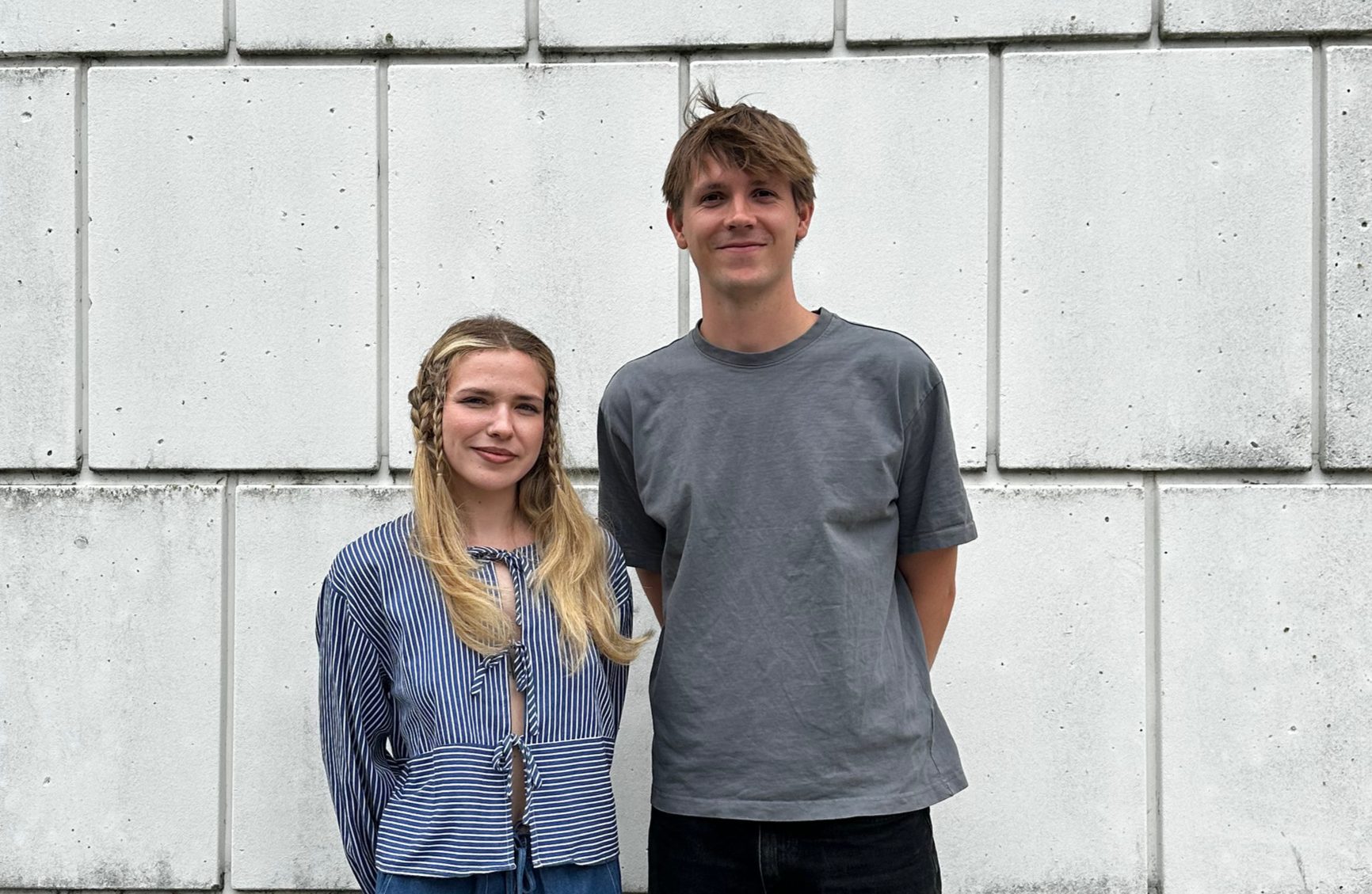
Malte Thodberg, PhD completed his research project titled “Partitioning the genetic risk of type 2 diabetes using multimodal single-cell sequencing of the gastrointestinal tract” at the Novo Nordisk Foundation Center for Basic Metabolic Research, University of Copenhagen with a grant from Danish Diabetes Academy (DDA) (now known as Danish Diabetes and Endocrine Academy).
We have asked Malte Thodberg to reflect on his time as a DDA-funded researcher.
What are the most exciting/important/unexpected findings of your research project?
The most exciting and unexpected finding was discovering just how much “location matters.” We knew that different cells in the gut perform different functions, but our data revealed profound anatomical differences in genetic risk along the human large intestine. We found that a genetic variant associated with a metabolic disease might only affect a specific cell type if that cell is located in a specific region of the colon. This adds a fascinating new spatial dimension to how we understand the genetics of diabetes and obesity.
How is your research project relevant to the public?
We know from large genetic studies that thousands of DNA variants increase the risk of Type 2 Diabetes and obesity, but for most of these variants, we have no idea how or where in the body they actually cause the disease. Our research acts as a map, translating abstract genetic risks into concrete biological mechanisms. By pinpointing the exact cells and regions in the gut responsible for these diseases, we pave the way for highly targeted precision medicine.
What was a highlight in your time as a DD(E)A-funded researcher?
A major highlight was seeing the clinical and computational worlds collide successfully. Receiving fresh human biopsies from our clinical collaborators at Bispebjerg Hospital and transforming them into incredibly detailed, multi-layered computational maps of the human gut was highly rewarding. Establishing these complex analytical pipelines and seeing the first joint visualizations of gene expression, chromatin accessibility, and genetic risk emerge on the screen was a defining moment.
Which challenges have you encountered (and overcome) on your way?
Working with multi-omics data from primary human tissue is incredibly complex. The sheer volume and sparsity of single-cell epigenetic data present immense computational challenges. Early on, integrating the different data modalities to create a cohesive biological narrative was difficult. However, by collaborating closely with domain experts and iteratively refining our statistical models, we developed robust pipelines capable of detecting subtle, cell-type-specific genetic signals hidden within the noise.
If you could go back in time and give yourself one piece of advice before starting your research project, what would it be?
I would tell myself not to get caught in the trap of endlessly optimizing data integration models. In the fast-moving field of single-cell multi-omics, there is a new, supposedly better tool published every week. I would advise myself to pick a robust statistical method early on and trust it, because the true value of the project lies in the biological interpretation and validation of the biology, rather than squeezing out the last 1% of statistical variance from the integration algorithm.
What has your DD(E)A grant meant for your research, education and network?
The DDA grant was absolutely crucial for my career. It provided the essential support I needed to return to Denmark from abroad and establish myself as a researcher at the Novo Nordisk Foundation Center for Basic Metabolic Research. It allowed me to build a unique profile at the intersection of clinical genomics and computational biology, and it gave me the freedom to foster incredible collaborations with both academic and clinical partners.
What is next for you?
Building on our success in mapping the large intestine, we are expanding the project to cover the entire gastrointestinal tract and combining single-cell multi-omics with tissue proteomics. I will continue this work as a Researcher at CBMR.
Malte Thodberg’s closest collaborator has been Bispebjerg University Hospital.
We wish Malte Thodberg all the best in his research career.
Odense University Hospital
Kløvervænget 6
Entrance 93, 8th floor
DK-5000 Odense C
+45 2964 6764
ouh.ddea@rsyd.dk
We use cookies on our website to give you the most relevant experience by remembering your preferences and repeat visits. By clicking “Accept all”, you consent to the use of all cookies. However you may visit Cookie Settings to provide a controlled consent. Cookie settings
This website uses cookies to improve your experience while you navigate through the website. Out of these cookies, the cookies that are categorized as necessary are stored on your browser as they are essential for the working of basic functionalities of the website. We also use third-party cookies that help us analyze and understand how you use this website. These cookies will be stored in your browser only with your consent. You also have the option to opt-out of these cookies. But opting out of some of these cookies may have an effect on your browsing experience.
Necessary cookies are absolutely essential for the website to function properly. These cookies ensure basic functionalities and security features of the website, anonymously.
Cookie
Duration
Description
cookielawinfo-checkbox-analytics
11 months
This cookie is set by GDPR Cookie Consent plugin. The cookie is used to store the user consent for the cookies in the category "Analytics".
cookielawinfo-checkbox-analytics
11 months
This cookie is set by GDPR Cookie Consent plugin. The cookie is used to store the user consent for the cookies in the category "Analytics".
cookielawinfo-checkbox-functional
11 months
The cookie is set by GDPR cookie consent to record the user consent for the cookies in the category "Functional".
cookielawinfo-checkbox-necessary
11 months
This cookie is set by GDPR Cookie Consent plugin. The cookies is used to store the user consent for the cookies in the category "Necessary".
cookielawinfo-checkbox-others
11 months
This cookie is set by GDPR Cookie Consent plugin. The cookie is used to store the user consent for the cookies in the category "Other.
cookielawinfo-checkbox-performance
11 months
This cookie is set by GDPR Cookie Consent plugin. The cookie is used to store the user consent for the cookies in the category "Performance".
viewed_cookie_policy
11 months
The cookie is set by the GDPR Cookie Consent plugin and is used to store whether or not user has consented to the use of cookies. It does not store any personal data.
Functional cookies help to perform certain functionalities like sharing the content of the website on social media platforms, collect feedbacks, and other third-party features.
Performance cookies are used to understand and analyze the key performance indexes of the website which helps in delivering a better user experience for the visitors.
Analytical cookies are used to understand how visitors interact with the website. These cookies help provide information on metrics the number of visitors, bounce rate, traffic source, etc.
Advertisement cookies are used to provide visitors with relevant ads and marketing campaigns. These cookies track visitors across websites and collect information to provide customized ads.