Home » DDEA » Living with Type 1 Diabetes – and Building the Knowledge Needed for Better Care
Living with Type 1 Diabetes – and Building the Knowledge Needed for Better Care
Posted on 08.06.2026
As a paediatrician, researcher, and person living with type 1 diabetes, Dr. Leonard Malasa is working to build the knowledge needed for better care.
For Dr. Leonard Malasa, type 1 diabetes is both a professional commitment and a personal reality.
As a paediatrician and lecturer in the Department of Paediatrics and Child Health at Kairuki University, in Dar es Salaam, Tanzania, he trains future healthcare professionals, mentors young researchers and provides care for children with chronic diseases. At the same time, he is also living with type 1 diabetes himself.
Video: Watch Leonard how to build knowledge for better care.
A Family Story Shaped by Diabetes
Type 1 diabetes has been part of his family’s story for many years. His older brother was diagnosed with the condition at a young age, but only after a prolonged period of illness and visits to several health facilities. Unfortunately, the diagnosis came too late to save his life. The dual experience as a healthcare professional and a person living with diabetes has given him a unique perspective on the challenges faced by people with type 1 diabetes in Tanzania.
Photo: Dr. Leonard Malasa performing clinical examination to a sick child
Nothing About Us Without Us
“Nothing about us without us,” Leonard says when describing his engagement in diabetes research and advocacy. Living with the condition helps him understand the realities that patients face beyond the clinic and motivates him to contribute through clinical care, research, education and mentorship
Why Data Matters
Photo: Dr. Leonard Malasa (center) is pictured alongside his medical students
One of the challenges he sees most clearly is the need for stronger knowledge systems. Across Tanzania, access to specialised diabetes services has improved substantially, but generating the evidence needed to further improve care remains difficult. In Sub-Saharan Africa, data are often fragmented, collected in different ways and not always brought together in systems that can support research, quality improvement and decision-making.
For Leonard, this is why strengthening data infrastructure must become part of the broader effort to improve diabetes care.
“Data is critical,” he explains. “It helps healthcare providers plan services, informs policymakers and provides the evidence needed for research.”
Strengthening Research Across Africa
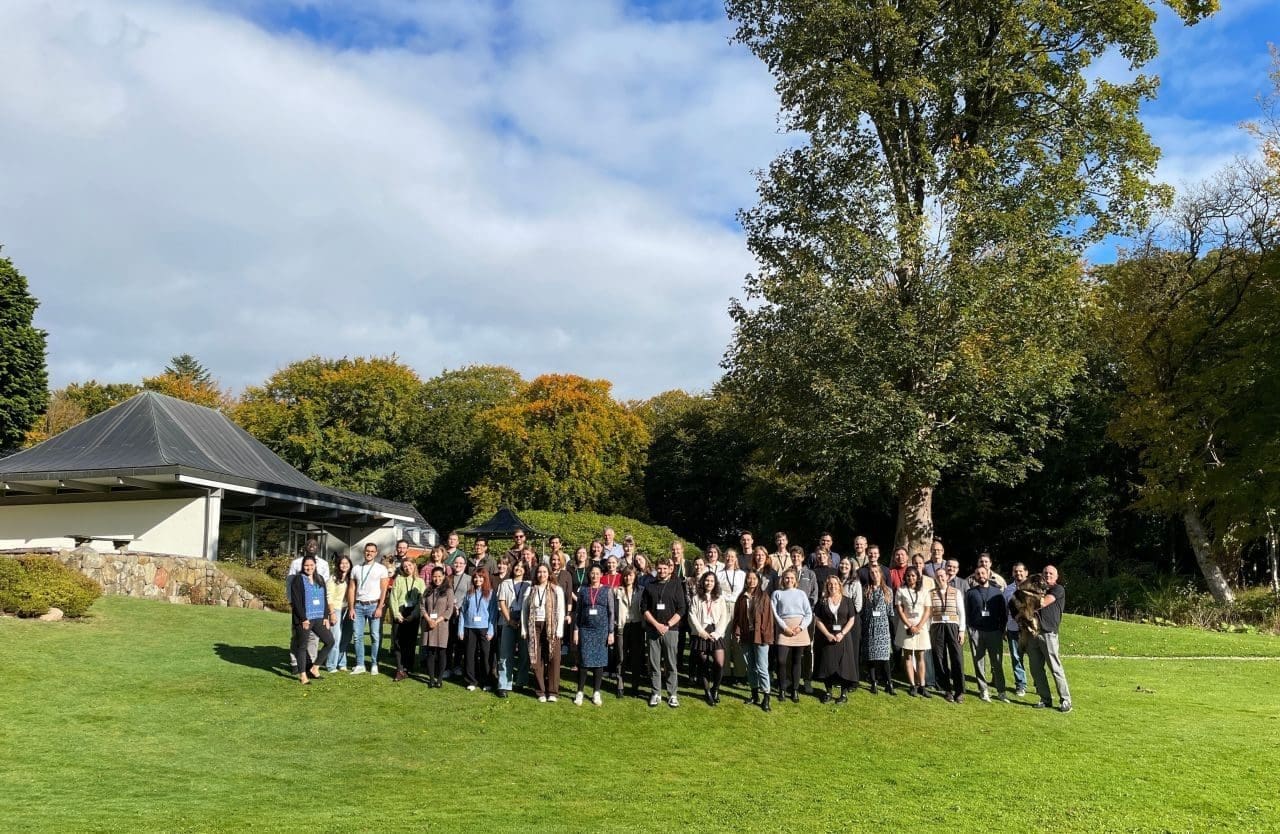
This commitment extends beyond his own institution. The Early-Career Researcher Network on Type 1 Diabetes brings together early-career researchers from low- and middle-income countries to strengthen collaboration, build research capacity, and improve the use of data for better diabetes care. As part of the network, Leonard is working with colleagues across Sub-Saharan Africa to strengthen research capacity and improve the quality of diabetes data.
Through a series of webinars, collaborative assignments, and cross-country exchanges, the network aims to build stronger foundations for research, clinical care, and policy-making. For Leonard, better data is not an end in itself. It is a tool for making better decisions and ultimately improving the lives of people living with type 1 diabetes.
Training the Next Generation
Alongside this work, Leonard is already investing in the future. He mentors students interested in diabetes research and hopes to establish a dedicated type 1 diabetes research programme at his institution.
Photo: Dr. Leonard Malasa engages medical students in a hands-on clinical teaching session
“Training, training, training,” he says when asked where he can make the greatest contribution. “My responsibility is to make sure that students graduate with the skills needed to care for individuals with diabetes.”
For Leonard, building better diabetes care starts with building capacity – in people, in research, and in the data systems that make progress possible.
Photo: Dr. Leonard Malasa (center) is pictured alongside his medical students
About the Early-Career Researcher Network on Type 1 Diabetes
Funding: Danish Ministry of Higher Education and Science – learn more here
Purpose: To strengthen collaboration, build research capacity, and improve the use of data for better type 1 diabetes care in low- and middle-income countries.
Network: 28 early-career researchers from 12 countries across Africa: Burkina Faso, Cameroon, Comoros, Djibouti, Ethiopia, Kenya, Malawi, Rwanda, Tanzania, Uganda, Zambia, and Zanzibar.
Partners: The network is organised through a collaboration between the Danish Diabetes and Endocrine Academy (DDEA), the World Diabetes Foundation (WDF), the EAST African Diabetes Study Group, and the University of Geneva, Faculty of Medicine, and is anchored in Denmark at Steno Diabetes Center Odense.
Current activities: The network continues through webinars, collaborative assignments, and cross-country exchanges, following a second Early-Career Researcher programme held in Tanzania in February 2026.
Podcast:Type 1 Diabetes Challenges and Actions, part of the DDEA Global Health Podcast series, explores challenges and opportunities in type 1 diabetes care and research in low- and middle-income countries. Listen wherever you get your podcasts or through the link.
Odense University Hospital
Kløvervænget 6
Entrance 93, 8th floor
DK-5000 Odense C
+45 2964 6764
ouh.ddea@rsyd.dk
We use cookies on our website to give you the most relevant experience by remembering your preferences and repeat visits. By clicking “Accept all”, you consent to the use of all cookies. However you may visit Cookie Settings to provide a controlled consent. Cookie settings
This website uses cookies to improve your experience while you navigate through the website. Out of these cookies, the cookies that are categorized as necessary are stored on your browser as they are essential for the working of basic functionalities of the website. We also use third-party cookies that help us analyze and understand how you use this website. These cookies will be stored in your browser only with your consent. You also have the option to opt-out of these cookies. But opting out of some of these cookies may have an effect on your browsing experience.
Necessary cookies are absolutely essential for the website to function properly. These cookies ensure basic functionalities and security features of the website, anonymously.
Cookie
Duration
Description
cookielawinfo-checkbox-analytics
11 months
This cookie is set by GDPR Cookie Consent plugin. The cookie is used to store the user consent for the cookies in the category "Analytics".
cookielawinfo-checkbox-analytics
11 months
This cookie is set by GDPR Cookie Consent plugin. The cookie is used to store the user consent for the cookies in the category "Analytics".
cookielawinfo-checkbox-functional
11 months
The cookie is set by GDPR cookie consent to record the user consent for the cookies in the category "Functional".
cookielawinfo-checkbox-necessary
11 months
This cookie is set by GDPR Cookie Consent plugin. The cookies is used to store the user consent for the cookies in the category "Necessary".
cookielawinfo-checkbox-others
11 months
This cookie is set by GDPR Cookie Consent plugin. The cookie is used to store the user consent for the cookies in the category "Other.
cookielawinfo-checkbox-performance
11 months
This cookie is set by GDPR Cookie Consent plugin. The cookie is used to store the user consent for the cookies in the category "Performance".
viewed_cookie_policy
11 months
The cookie is set by the GDPR Cookie Consent plugin and is used to store whether or not user has consented to the use of cookies. It does not store any personal data.
Functional cookies help to perform certain functionalities like sharing the content of the website on social media platforms, collect feedbacks, and other third-party features.
Performance cookies are used to understand and analyze the key performance indexes of the website which helps in delivering a better user experience for the visitors.
Analytical cookies are used to understand how visitors interact with the website. These cookies help provide information on metrics the number of visitors, bounce rate, traffic source, etc.
Advertisement cookies are used to provide visitors with relevant ads and marketing campaigns. These cookies track visitors across websites and collect information to provide customized ads.