Home » DDEA » Three leadership questions to ask before you become a PI
Three leadership questions to ask before you become a PI
Posted on 07.09.2026
Learn how to navigate your career, shape your future research team and approach conflict constructively – with insights from nine postdocs who took discussions from the DDEA Postdoc Summit 2025 to Nature Reviews Endocrinology.
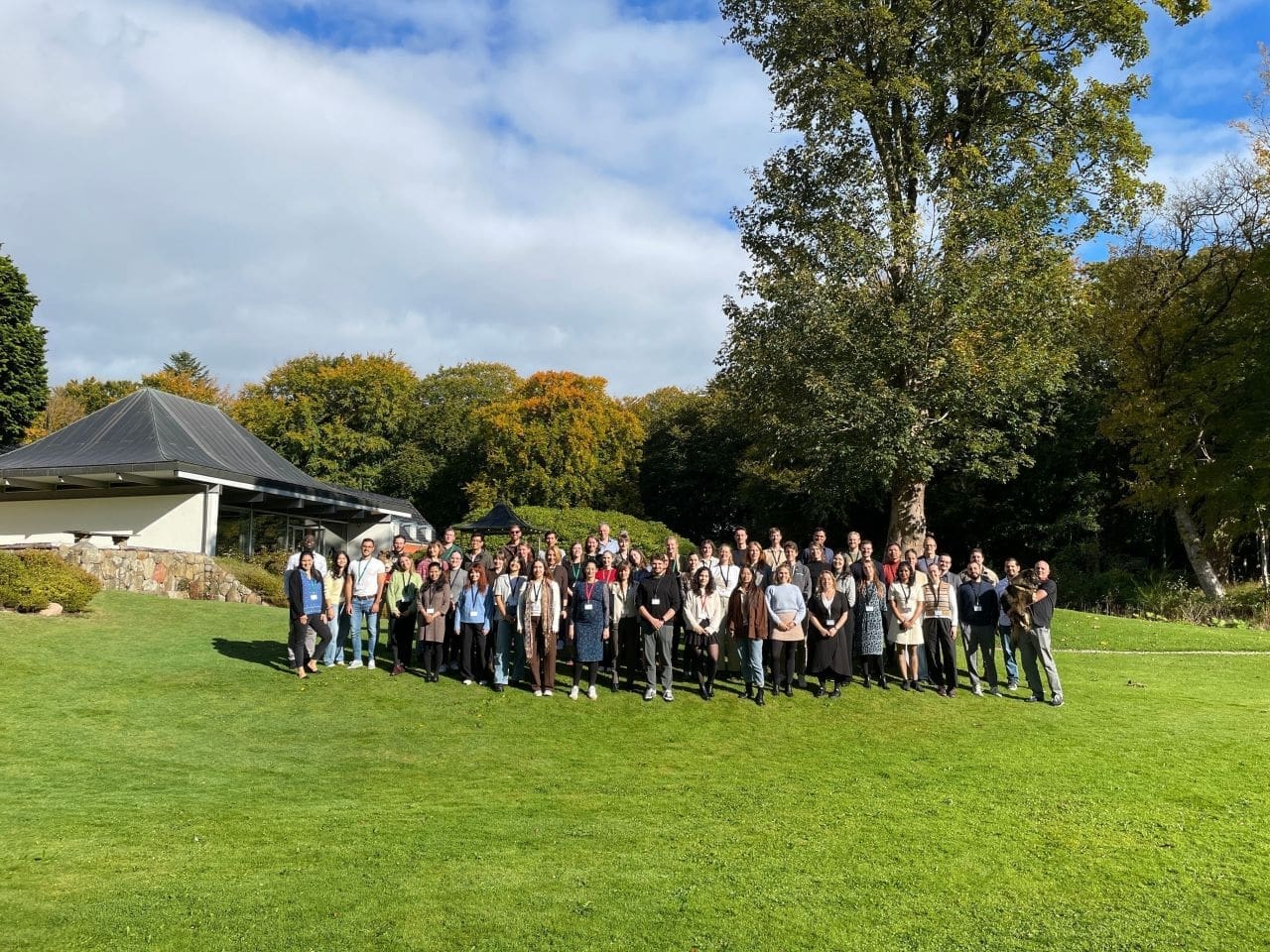
Photo:DDEA Postdoc Summit 2025.
You do not need your own research group to encounter leadership as a researcher.
As a postdoc, you may already be supervising junior researchers, taking responsibility for projects and collaborations, or making decisions that affect other people’s work.
Thilo Chillon, PhD, postdoctoral researcher at the Department of Clinical Biochemistry, Odense University Hospital, and one of the nine researchers behind the new Comment, recognises that experience:
“During my PhD and postdoc, I encountered many different forms of leadership: leading my first experiments, supervising a lab intern, taking responsibility for a project, mentoring a student, coordinating a collaboration, or simply stepping up when something needed to be done.
As a postdoc, I realised that I was already using leadership skills, even though I did not necessarily think of myself as a leader.”
The central message is simple: leadership development should not wait until you become a principal investigator (PI). Three areas are particularly worth thinking about now: your own career direction, the research team you want to build and how you navigate conflict.
1. What should guide your next career move?
Becoming a scientific leader starts with leading yourself.
What matters most in your next move: the research itself, the people you work with, opportunities to develop new skills, professional impact, work-life integration, where you live – or something else? Thinking about these priorities together can make the trade-offs clearer and help you make career decisions based on what matters to you rather than perceived prestige.
And the next move does not necessarily have to be towards a traditional academic career. Skills developed during a postdoc – including critical analysis, project management, communication and decision-making – are relevant across many different career paths.
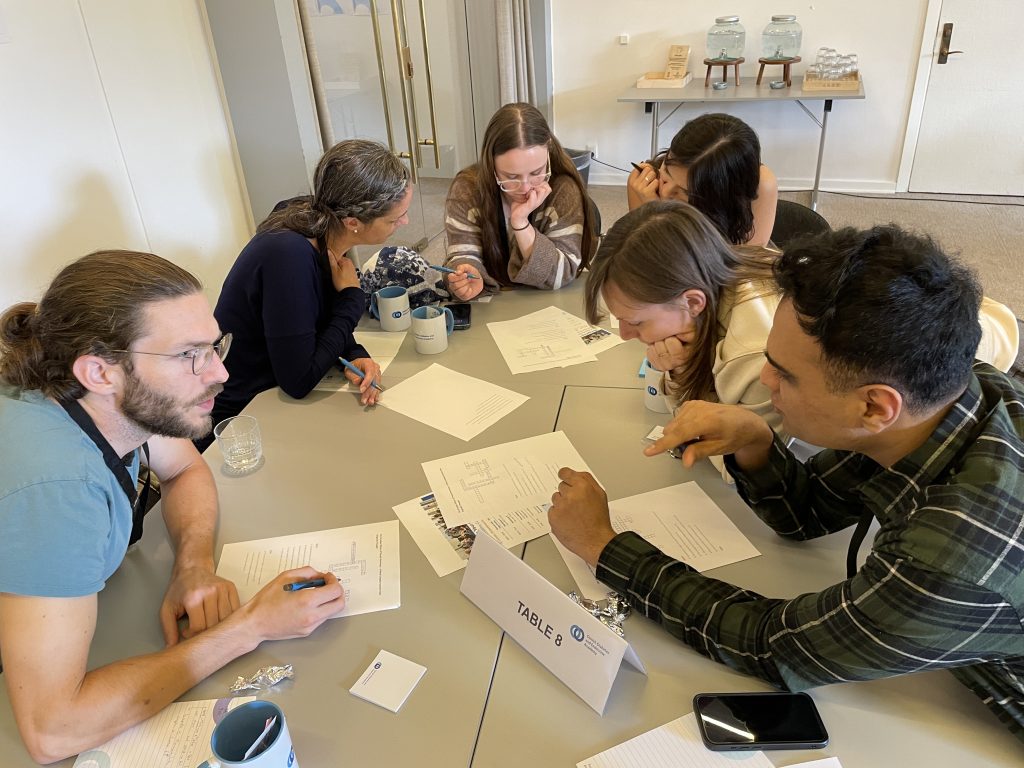
Photo:DDEA Postdoc Summit 2025.
2. What kind of research leader do you want to be?
Moving towards independence also means thinking about how you want to work with other people.
What kind of group do you want to build? Do you see people working closely together towards shared goals, or working more independently on individual projects? And which technical and soft skills will you need across the team?
Thinking about this before you have your own group gives you a chance to be deliberate about the culture you want to create – rather than letting it develop by default.
3. What will you do when people disagree?
Research brings together people with different goals, expectations, values and ways of working. Disagreement is therefore not necessarily a sign that something has gone wrong. The question is what you do with it.
Recognising disagreements early and creating space for open dialogue can help uncover the different expectations and needs behind them – and make it easier to find a way forward.
Not every disagreement can be resolved. But learning how to approach conflict constructively is itself part of becoming a scientific leader.
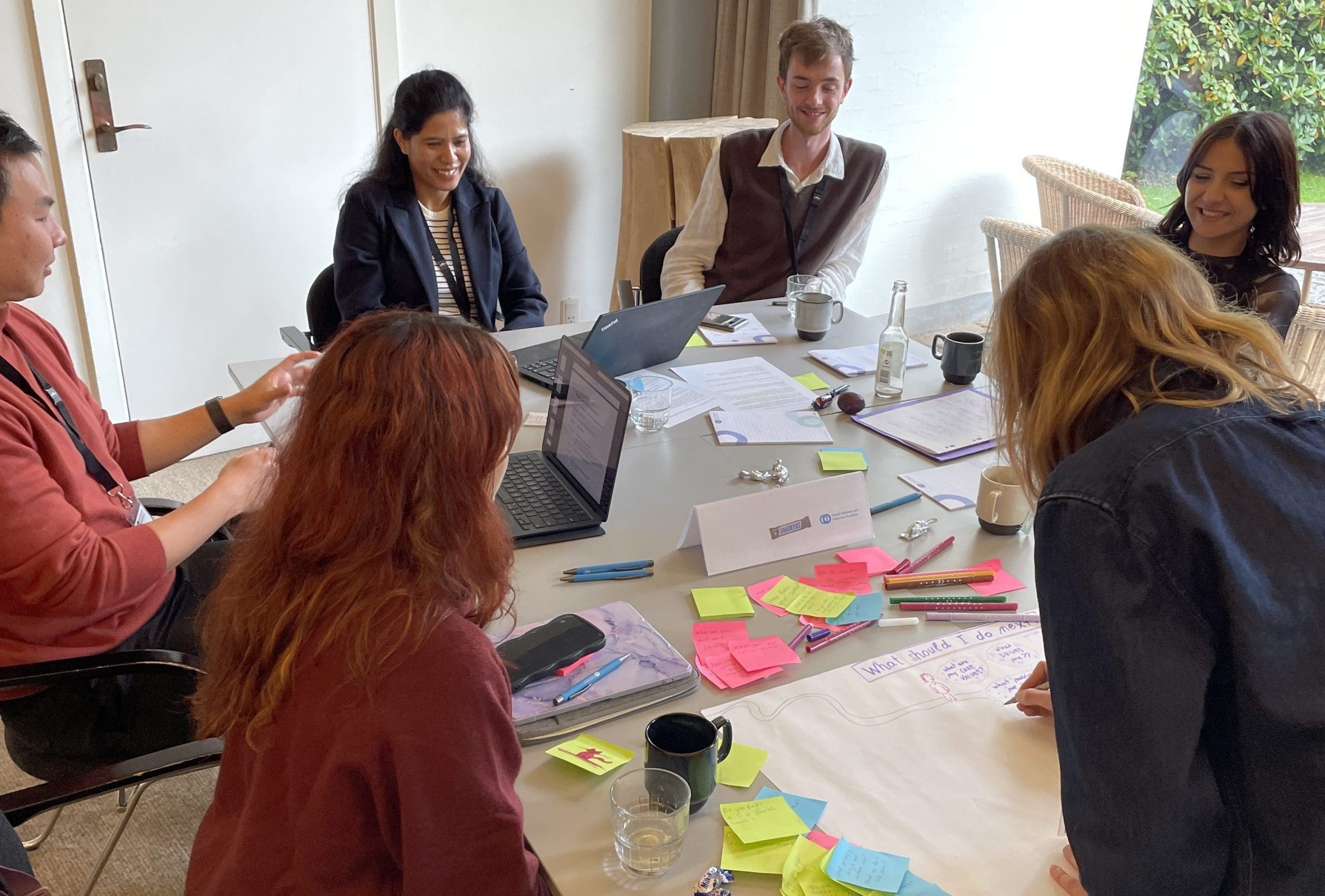
Photo:DDEA Postdoc Summit 2025.
Too valuable to end when the Summit did
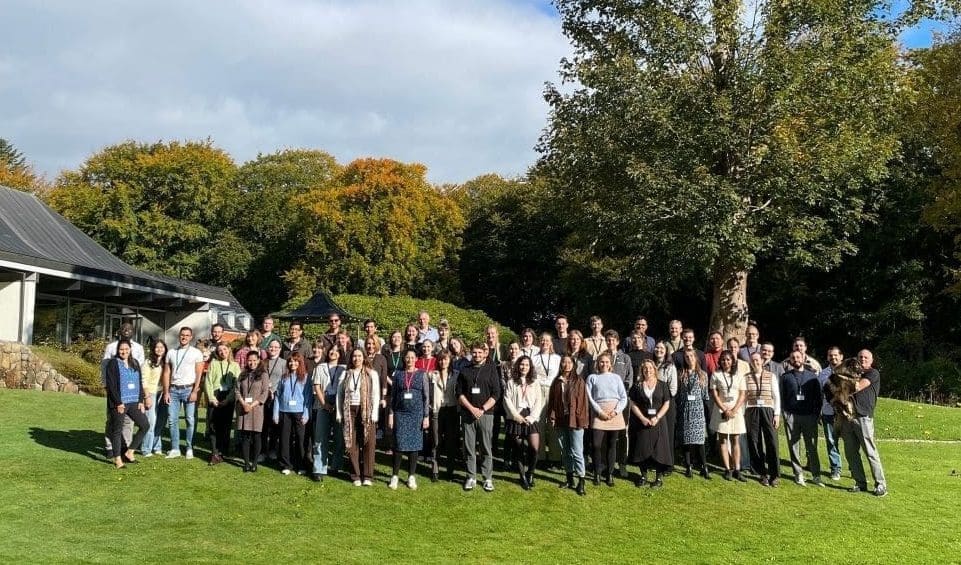
The Comment began with discussions at the DDEA Postdoc Summit 2025, where postdocs from different countries explored scientific leadership through their own experiences and perspectives.
For Thilo Chillon and eight fellow participants, those discussions were worth continuing after the Summit:
“The discussions at the DDEA Postdoc Summit were too valuable to end when the Summit did.”
Together with Leonardo VM de Assis, Richard M. Blay, Madilyn Coles, Taylah Gaynor, Mathilde Palmier, Aswathi Surendran, Elpida Vounzoulaki and Ingrid Wagnon, Thilo Chillon took the ideas further and developed them into the Comment. The publication combines experiences and discussions from the Summit with existing research on leadership development.
The publication also credits the wider group behind those discussions: all participants in the DDEA Postdoc Summit 2025 are acknowledged for contributing their experiences and perspectives.
Photo:Participants at the DDEA Postdoc Summit 2025, where the discussions behind the new Comment began.
What can happen when ECRs take ownership
For DDEA Managing Director, Tore Christiansen, the publication shows why DDEA has made early-career researcher ownership a priority:
“Giving early-career researchers real ownership has been a deliberate part of DDEA’s approach for years, not just for this event. ECRs today co-organise our courses, sit on our Committee for Education and our Board of Directors, and shape the priorities we pursue. The fact that a discussion from the Postdoc Summit has now turned into a Nature Reviews Endocrinology publication is exactly what that long-term investment is meant to produce”
Read the Comment
Leadership for the postdoctoral to independent investigator transition Nature Reviews Endocrinology
Odense University Hospital
Kløvervænget 6
Entrance 93, 8th floor
DK-5000 Odense C
+45 2964 6764
ouh.ddea@rsyd.dk
We use cookies on our website to give you the most relevant experience by remembering your preferences and repeat visits. By clicking “Accept all”, you consent to the use of all cookies. However you may visit Cookie Settings to provide a controlled consent. Cookie settings
This website uses cookies to improve your experience while you navigate through the website. Out of these cookies, the cookies that are categorized as necessary are stored on your browser as they are essential for the working of basic functionalities of the website. We also use third-party cookies that help us analyze and understand how you use this website. These cookies will be stored in your browser only with your consent. You also have the option to opt-out of these cookies. But opting out of some of these cookies may have an effect on your browsing experience.
Necessary cookies are absolutely essential for the website to function properly. These cookies ensure basic functionalities and security features of the website, anonymously.
Cookie
Duration
Description
cookielawinfo-checkbox-analytics
11 months
This cookie is set by GDPR Cookie Consent plugin. The cookie is used to store the user consent for the cookies in the category "Analytics".
cookielawinfo-checkbox-analytics
11 months
This cookie is set by GDPR Cookie Consent plugin. The cookie is used to store the user consent for the cookies in the category "Analytics".
cookielawinfo-checkbox-functional
11 months
The cookie is set by GDPR cookie consent to record the user consent for the cookies in the category "Functional".
cookielawinfo-checkbox-necessary
11 months
This cookie is set by GDPR Cookie Consent plugin. The cookies is used to store the user consent for the cookies in the category "Necessary".
cookielawinfo-checkbox-others
11 months
This cookie is set by GDPR Cookie Consent plugin. The cookie is used to store the user consent for the cookies in the category "Other.
cookielawinfo-checkbox-performance
11 months
This cookie is set by GDPR Cookie Consent plugin. The cookie is used to store the user consent for the cookies in the category "Performance".
viewed_cookie_policy
11 months
The cookie is set by the GDPR Cookie Consent plugin and is used to store whether or not user has consented to the use of cookies. It does not store any personal data.
Functional cookies help to perform certain functionalities like sharing the content of the website on social media platforms, collect feedbacks, and other third-party features.
Performance cookies are used to understand and analyze the key performance indexes of the website which helps in delivering a better user experience for the visitors.
Analytical cookies are used to understand how visitors interact with the website. These cookies help provide information on metrics the number of visitors, bounce rate, traffic source, etc.
Advertisement cookies are used to provide visitors with relevant ads and marketing campaigns. These cookies track visitors across websites and collect information to provide customized ads.