Home » DDEA » Creating Space for Conversations About Diabetes
Creating Space for Conversations About Diabetes
Posted on 11.06.2026
Living with type 1 diabetes herself, Lucy Johnbosco is using advocacy, education, and community engagement to challenge misconceptions and improve diabetes care in Tanzania.
For Lucy Johnbosco, improving diabetes care starts with something very simple: making it normal to talk about diabetes.
Photo: Lucy Johnbosco speaking at the DiCoCo Women and Diabetes Event in Bagamoyo, Tanzania. The event equips women with knowledge and practical skills for diabetes care, recognising their central role as caregivers within families and communities.
Lucy is a journalist, writer, diabetes educator, and founder of Diabetes Consciousness for Community (DiCoCo), a Tanzanian organisation dedicated to raising awareness and supporting people living with diabetes. She is also living with type 1 diabetes herself and has done so for most of her life.
Challenging Misconceptions About Diabetes
Over the years, she has witnessed how misconceptions about diabetes continue to shape people’s lives. In many communities, diabetes is still associated with stigma, myths, and misunderstanding. Some people believe that only older adults can develop diabetes, while others associate the condition with personal failure or even supernatural causes.
Rather than accepting these misconceptions, Lucy decided to challenge them.
Video: Watch Lucy here.
Speaking Up and Raising Awareness
Her first experiences as an advocate began while she was still a student. After returning to school following a serious diabetes-related illness, she found herself confronted by rumours and speculation about her health. Instead of remaining silent, she stood in front of her classmates and explained what type 1 diabetes was and what it meant to live with it. What began as a personal explanation became the start of a much broader commitment to diabetes awareness.
Photo: Lucy Johnbosco speaking at the DiCoCo Women and Diabetes Event in Bagamoyo, Tanzania.
Today, that commitment reaches far beyond the classroom. Through her organisation, media work, and community engagement, Lucy works to create environments where people feel comfortable discussing diabetes openly.
“My first objective is to create an environment where it is normal to talk about diabetes,” she explains. “Information is there, but the question is: is it the right information?”
Photo: Lucy Johnbosco speaking during a DiCoCo radio programme in Tanzania. Through media outreach, she advocates for greater diabetes awareness and highlights challenges faced by people living with diabetes, including access to affordable insulin syringes in rural areas.
Using Evidence to Improve Diabetes Care
This focus on communication also shapes her views on research and health systems. While access to medicines remains important, Lucy believes that understanding people’s experiences is equally essential.
Photo: Lucy Johnbosco with students during a DiCoCo Primary School Diabetes Programme. Through school-based education, DiCoCo works to increase diabetes awareness among children and teachers and encourage open conversations about the condition.
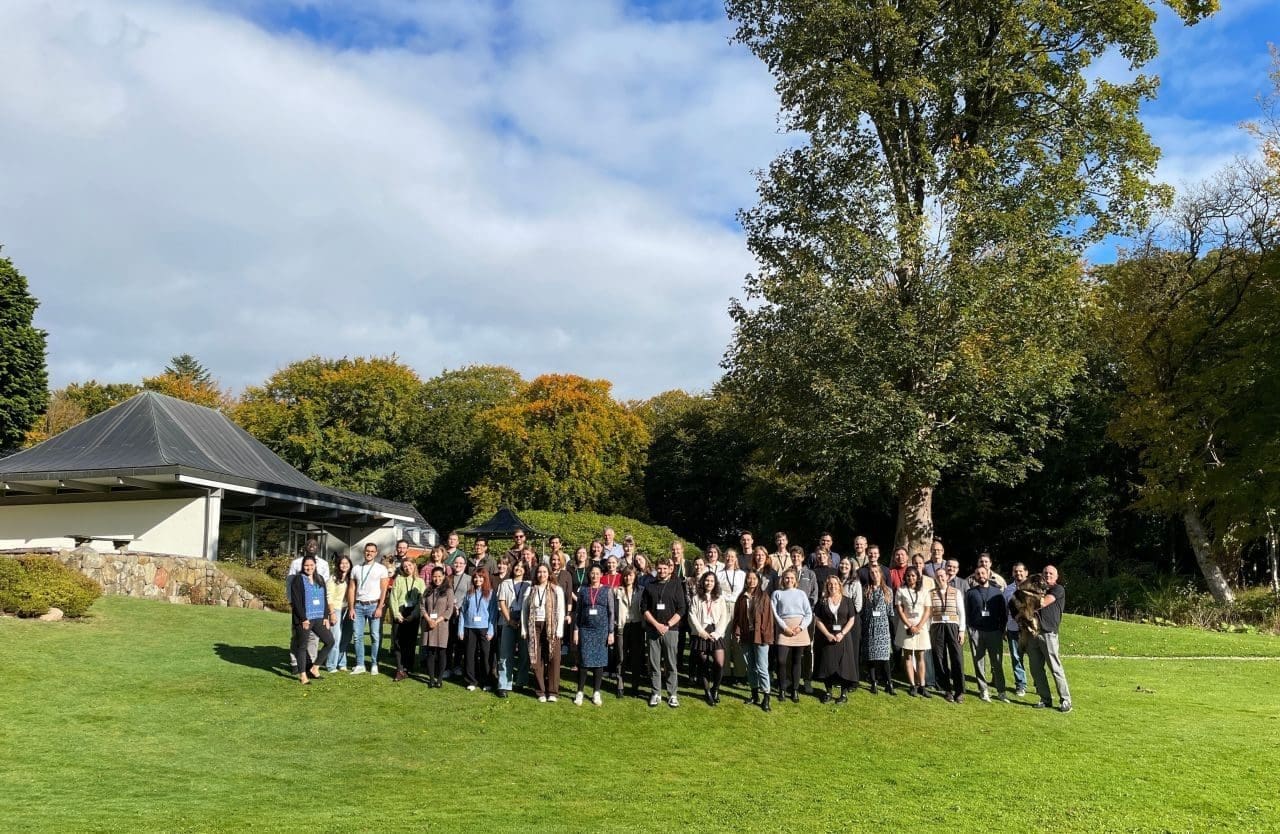
The Early-Career Researcher Network on Type 1 Diabetes brings together early-career researchers from low- and middle-income countries to strengthen collaboration, build research capacity, and improve the use of data for better diabetes care.
As part of the network, she has become increasingly engaged in discussions about data and evidence. For Lucy, the challenge is often not the absence of data, but whether the right data is being collected, used, and translated into better services.
“Data should help us identify the gaps,” she says. “It should help us understand what people living with diabetes need beyond medication and how services can be improved.”
Through the network’s webinars, collaborative assignments, and cross-country exchanges, researchers, clinicians, and advocates are working together to strengthen the evidence base for type 1 diabetes across Sub-Saharan Africa. Lucy sees this as an opportunity to ensure that patient experiences become part of the conversation alongside clinical and health system data.
Building Stronger Communities for People with Diabetes
For her, better diabetes care is not only about stronger health systems. It is also about stronger communities, better information, and creating spaces where people feel able to speak openly about the realities of living with diabetes.
Because meaningful change, she believes, begins when people are willing to start the conversation.
Photo: Lucy Johnbosco with students during a DiCoCo Primary School Diabetes Programme.
About the Early-Career Researcher Network on Type 1 Diabetes
Funding: Danish Ministry of Higher Education and Science – learn more here
Purpose: To strengthen collaboration, build research capacity, and improve the use of data for better type 1 diabetes care in low- and middle-income countries.
Network: 28 early-career researchers from 12 countries across Africa: Burkina Faso, Cameroon, Comoros, Djibouti, Ethiopia, Kenya, Malawi, Rwanda, Tanzania, Uganda, Zambia, and Zanzibar.
Partners: The network is organised through a collaboration between the Danish Diabetes and Endocrine Academy (DDEA), the World Diabetes Foundation (WDF), the EAST African Diabetes Study Group, and the University of Geneva, Faculty of Medicine, and is anchored in Denmark at Steno Diabetes Center Odense.
Current activities: The network continues through webinars, collaborative assignments, and cross-country exchanges, following a second Early-Career Researcher programme held in Tanzania in February 2026.
Podcast:Type 1 Diabetes Challenges and Actions, part of the DDEA Global Health Podcast series, explores challenges and opportunities in type 1 diabetes care and research in low- and middle-income countries. Listen wherever you get your podcasts or through the link.
Odense University Hospital
Kløvervænget 6
Entrance 93, 8th floor
DK-5000 Odense C
+45 2964 6764
ouh.ddea@rsyd.dk
We use cookies on our website to give you the most relevant experience by remembering your preferences and repeat visits. By clicking “Accept all”, you consent to the use of all cookies. However you may visit Cookie Settings to provide a controlled consent. Cookie settings
This website uses cookies to improve your experience while you navigate through the website. Out of these cookies, the cookies that are categorized as necessary are stored on your browser as they are essential for the working of basic functionalities of the website. We also use third-party cookies that help us analyze and understand how you use this website. These cookies will be stored in your browser only with your consent. You also have the option to opt-out of these cookies. But opting out of some of these cookies may have an effect on your browsing experience.
Necessary cookies are absolutely essential for the website to function properly. These cookies ensure basic functionalities and security features of the website, anonymously.
Cookie
Duration
Description
cookielawinfo-checkbox-analytics
11 months
This cookie is set by GDPR Cookie Consent plugin. The cookie is used to store the user consent for the cookies in the category "Analytics".
cookielawinfo-checkbox-analytics
11 months
This cookie is set by GDPR Cookie Consent plugin. The cookie is used to store the user consent for the cookies in the category "Analytics".
cookielawinfo-checkbox-functional
11 months
The cookie is set by GDPR cookie consent to record the user consent for the cookies in the category "Functional".
cookielawinfo-checkbox-necessary
11 months
This cookie is set by GDPR Cookie Consent plugin. The cookies is used to store the user consent for the cookies in the category "Necessary".
cookielawinfo-checkbox-others
11 months
This cookie is set by GDPR Cookie Consent plugin. The cookie is used to store the user consent for the cookies in the category "Other.
cookielawinfo-checkbox-performance
11 months
This cookie is set by GDPR Cookie Consent plugin. The cookie is used to store the user consent for the cookies in the category "Performance".
viewed_cookie_policy
11 months
The cookie is set by the GDPR Cookie Consent plugin and is used to store whether or not user has consented to the use of cookies. It does not store any personal data.
Functional cookies help to perform certain functionalities like sharing the content of the website on social media platforms, collect feedbacks, and other third-party features.
Performance cookies are used to understand and analyze the key performance indexes of the website which helps in delivering a better user experience for the visitors.
Analytical cookies are used to understand how visitors interact with the website. These cookies help provide information on metrics the number of visitors, bounce rate, traffic source, etc.
Advertisement cookies are used to provide visitors with relevant ads and marketing campaigns. These cookies track visitors across websites and collect information to provide customized ads.