Home » DDEA » "It’s Nothing Personal": A New Perspective on Diabetes Management
“It’s Nothing Personal”: A New Perspective on Diabetes Management
Posted on 23.10.2024
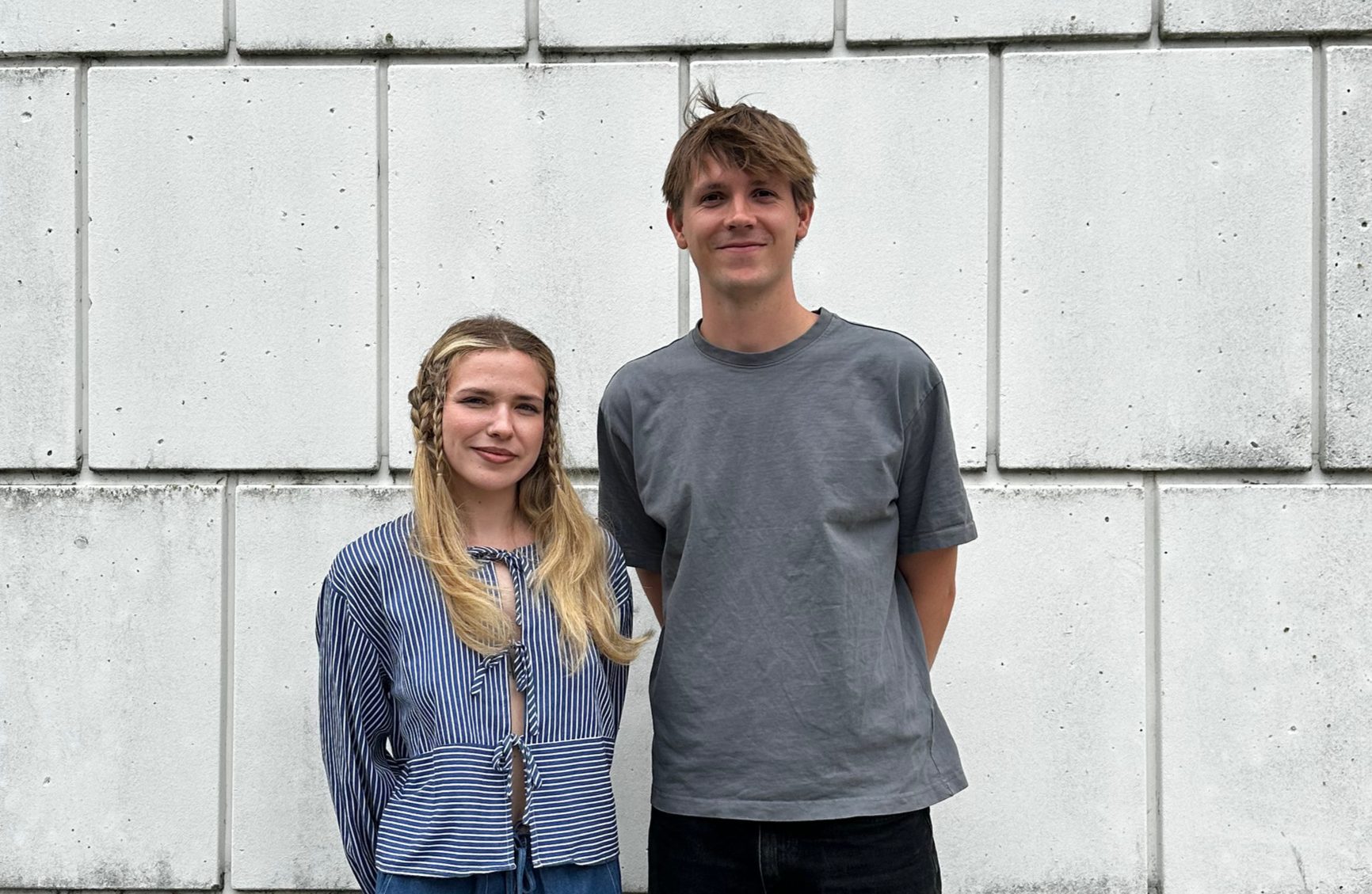
Danish Diabetes and Endocrine Academy invited Freja Hincheli, who lives with type 1 diabetes, and Walther Jensen, who lives with type 2 diabetes, to EASD to explore a world of research that often feels distant from everyday diabetes management. Paired with scientific hosts, attending scientific sessions together proved to be an eye-opening experience for both participants and researchers.
For the second time, Danish Diabetes and Endocrine Academy (DDEA) invited two people with diabetes to the Annual Meeting of the European Association for the Study of Diabetes (EASD). The academy prepared a personalised programme for them with suggested scientific sessions based on their interests and diabetes type. Additionally, the academy paired them with scientific hosts—early-career researchers—who attended sessions with them, helping to explain the research and answer any questions.
A New Perspective on Diabetes Management
Freja Hincheli, who lives with type 1 diabetes, attended EASD to deepen her understanding of diabetes beyond her personal experience.
“Diabetes is part of my life every single hour. I’m interested in learning more about the disease beyond my daily experience with it,” she says.
Freja was fascinated to see how diabetes is more than a medical condition to live with, but also a field of study, a business, and a focus of research for scientists working to improve the lives of those affected.
“When it is something you manage every day, it becomes personal. I have gained a new perspective on diabetes: It has been a good reminder to see diabetes more objectively as a disease that I am just unlucky to live with, rather than something to feel frustrated by. I think this perspective can help me improve my management,” she reflects.
This shift empowers her to manage her diabetes with greater calm.
Walther Jensen, who lives with type 2 diabetes, echoes Freja’s sentiment. His growing interest in the scientific side of diabetes drew him to EASD, where he discovered a world of research that often feels distant from everyday life.
“As people living with diabetes, we can ask the ‘simple’ questions that make research more relevant to real-world users,” he says. “I often look for the practical impact of scientific work. Will this research actually make a difference for those of us living with the disease? For example, we discussed studies on diabetes distress. While they focused on solutions, my input was that we need to ensure GPs and nurses understand what diabetes distress is and don’t mistake it for depression.“
Attending the conference left him feeling optimistic about the future, especially after seeing the large number of studies focused on improving care. Many presentations emphasised the importance of considering mental health alongside the physical aspects of diabetes.
“It is a reminder that diabetes is not just about biomedical data, but also about the impact the disease has on our mental well-being,” Walther says.
The Value of a Scientific Host
A crucial part of Freja and Walther’s experience was attending sessions with their scientific hosts. Sofie Frigaard Kristoffersen, a PhD student at Steno Diabetes Center Odense, volunteered to guide them through the conference, helping bridge the gap between complex scientific concepts and everyday diabetes management.
“By visiting the conference with people living with diabetes, I gain valuable insights into their perspectives, which are essential for improving scientific approaches and patient outcomes,” Sofie explains.
Freja found Sofie’s support invaluable.
“It is incredibly helpful to have someone who can explain the terminology,” Freja says.
Although some research felt far removed from Freja’s daily struggles, the scientific hosts also helped her recognise the importance of every discovery.
“One of the scientific hosts explained that even if the research does not immediately impact my diabetes management, it opens new doors for future breakthroughs,” she recalls.
This insight helps her appreciate the long-term significance of scientific advancements.
Other sessions were more easily translatable to everyday life. Freja and Sofie attended sessions like Why Exercise, exploring how scientific findings could translate into practical, everyday solutions for managing the disease.
“The session really inspired me, especially in terms of making lifestyle choices to manage my condition more effectively,” Freja says. “For example, I have started trying not to eat between 8 p.m. and 8 a.m., exercising in the morning when it is easier to avoid low blood sugar, eating fewer carbs, and setting my insulin pump to ‘active mode’ at least 30 minutes before working out.”
“Being a scientific host for Freja was a truly meaningful experience. It allowed me to engage directly with people with diabetes, which gave me a deeper appreciation of how scientific work can impact their lives,” Sofie reflects.
Ingrid Willaing, Walther Jensen, Freja Hincheli, Mette Roed, and Tore Christiansen at EASD 2024.
Mutual Learning and Empowerment
Walther Jensen also appreciated the opportunity to have deep, meaningful discussions with his host.
“The positive clash between science and everyday diabetes management sparked interesting debates, and we did not always agree,” he notes, emphasising how differing perspectives can drive scientific progress.
To bridge the gap between persons living with diabetes and researchers, Walther advocates for public and user involvement in research.
“We can serve as a checkpoint: Does your scientific study have relevance for specific users? Your research question, methods, and conclusions are all good places to check in,” he says.
One of Freja’s most rewarding moments at EASD was realising that her voice mattered.
“Despite knowing the least about the technical side of diabetes, I felt empowered. People were genuinely interested in hearing what I have to say,” she recalls.
Public Involvement and Outreach is a strategic focus for DDEA.
DDEA has a Public Advisory Panel that provides recommendations, ideas, and feedback to DDEA on strategy for connecting early-career researchers with society through education, networking activities, and funding and communication activities.
The Public Advisory Panel co-creates and implements the DDEA Public Involvement and Outreach Programme that facilitates cooperation between researchers, especially those early in their careers, and the public.
Odense University Hospital
Kløvervænget 6
Entrance 93, 8th floor
DK-5000 Odense C
+45 2964 6764
ouh.ddea@rsyd.dk
We use cookies on our website to give you the most relevant experience by remembering your preferences and repeat visits. By clicking “Accept all”, you consent to the use of all cookies. However you may visit Cookie Settings to provide a controlled consent. Cookie settings
This website uses cookies to improve your experience while you navigate through the website. Out of these cookies, the cookies that are categorized as necessary are stored on your browser as they are essential for the working of basic functionalities of the website. We also use third-party cookies that help us analyze and understand how you use this website. These cookies will be stored in your browser only with your consent. You also have the option to opt-out of these cookies. But opting out of some of these cookies may have an effect on your browsing experience.
Necessary cookies are absolutely essential for the website to function properly. These cookies ensure basic functionalities and security features of the website, anonymously.
Cookie
Duration
Description
cookielawinfo-checkbox-analytics
11 months
This cookie is set by GDPR Cookie Consent plugin. The cookie is used to store the user consent for the cookies in the category "Analytics".
cookielawinfo-checkbox-analytics
11 months
This cookie is set by GDPR Cookie Consent plugin. The cookie is used to store the user consent for the cookies in the category "Analytics".
cookielawinfo-checkbox-functional
11 months
The cookie is set by GDPR cookie consent to record the user consent for the cookies in the category "Functional".
cookielawinfo-checkbox-necessary
11 months
This cookie is set by GDPR Cookie Consent plugin. The cookies is used to store the user consent for the cookies in the category "Necessary".
cookielawinfo-checkbox-others
11 months
This cookie is set by GDPR Cookie Consent plugin. The cookie is used to store the user consent for the cookies in the category "Other.
cookielawinfo-checkbox-performance
11 months
This cookie is set by GDPR Cookie Consent plugin. The cookie is used to store the user consent for the cookies in the category "Performance".
viewed_cookie_policy
11 months
The cookie is set by the GDPR Cookie Consent plugin and is used to store whether or not user has consented to the use of cookies. It does not store any personal data.
Functional cookies help to perform certain functionalities like sharing the content of the website on social media platforms, collect feedbacks, and other third-party features.
Performance cookies are used to understand and analyze the key performance indexes of the website which helps in delivering a better user experience for the visitors.
Analytical cookies are used to understand how visitors interact with the website. These cookies help provide information on metrics the number of visitors, bounce rate, traffic source, etc.
Advertisement cookies are used to provide visitors with relevant ads and marketing campaigns. These cookies track visitors across websites and collect information to provide customized ads.