Home » DDEA » Ultra-processed Foods: Beyond Calories, Fat and Sugar
Ultra-processed Foods: Beyond Calories, Fat and Sugar
Posted on 24.03.2026
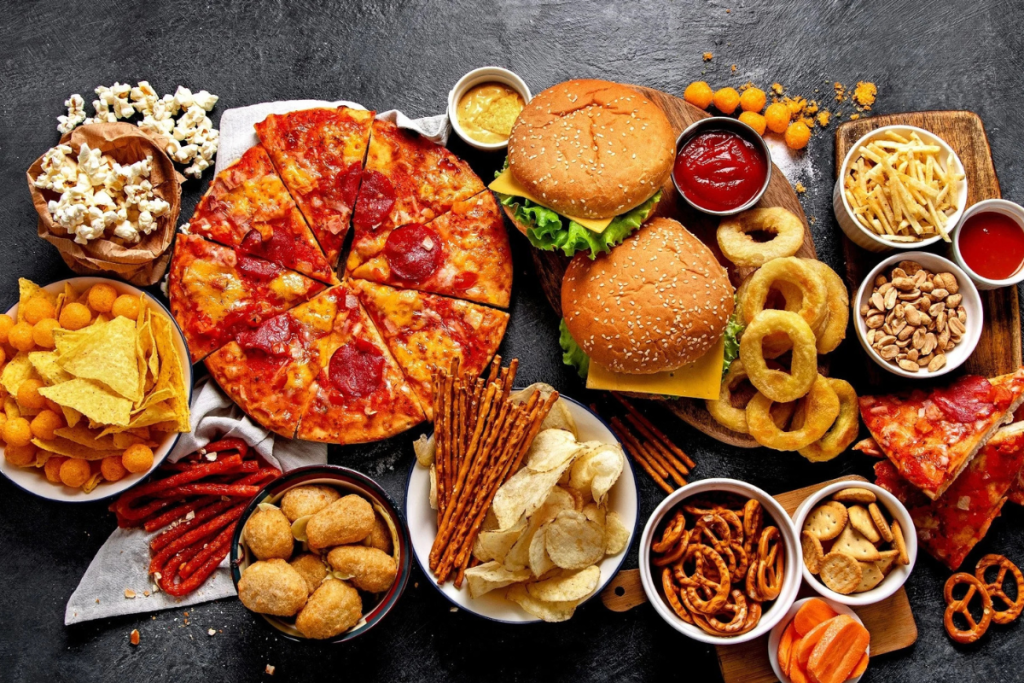
Ultra-processed foods are linked to obesity, type 2 diabetes and cardiovascular disease – but what are they actually doing to the body?
Ultra-processed foods now make up a substantial part of what many people eat every day.
“Ultra-processed foods now make up a substantial part of what many people eat every day,” says Benjamin A. H. Jensen, Associate Professor at the University of Copenhagen. “We are increasingly realising that they may harm health in ways that go beyond calories, fat and sugar.”
At the same time, the discussion around ultra-processed foods is accelerating.
“The public debate is moving very fast, sometimes faster than the science,” he says. “We urgently need nuanced, data-driven discussions that can guide patients, clinicians and policy.”
If the debate is moving faster than the science, the question becomes what the science is actually able to explain.
Why Ultra-processed Foods are Difficult to Define
“One major complexity is definition,” Jensen explains. “There is no universal agreement on what ‘ultra processed’ actually means, and different classification systems do not always place the same foods in the same category.”
This makes it difficult to align findings across studies and draw consistent conclusions.
“Disentangling processing from nutrient composition, additives, food structure and eating behaviour is complex,” he says. “All of these factors may contribute.”
“Epidemiologists, clinicians, basic scientists, food technologists and regulators often look at the same products through very different lenses,” Jensen adds.
Photo: Benjamin Jensen
What Happens in the Body
“Think of your gut microbiome as a software that is constantly being updated and reprogrammed by your diet,” says Benoit Chassaing, Research Director and Head of the Microbiome-Host Interactions unit at Institut Pasteur. “Ultra-processed foods are not just feeding us. They are programming our gut bacteria in ways we never expected.”
“After two decades of intensive research, we have moved beyond simply describing the microbiome to actually understanding the mechanisms behind it,” he says.
Photo: Benoit Chassaing
“Beyond the lack of fibre, which starves beneficial bacteria, we are closely examining additives once considered harmless, including emulsifiers, artificial sweeteners, food colourants and even nanoparticles,” Chassaing explains. “These ingredients are proving to be anything but inert.”
His research examines how genetic and environmental factors can disrupt the intestinal microbiota and contribute to intestinal inflammation, and how diet shapes microbial composition and function in both health and disease.
From Understanding to Application
“We can now characterize how dietary factors and environmental stressors shape these microbial communities,” Chassaing says. “This understanding gives us a concrete biological readout of why certain foods promote health while others drive disease.”
“We are at an incredibly exciting inflection point where decades of basic research are finally translating into clinical applications,” he says.
Beyond “Good” and “Bad”
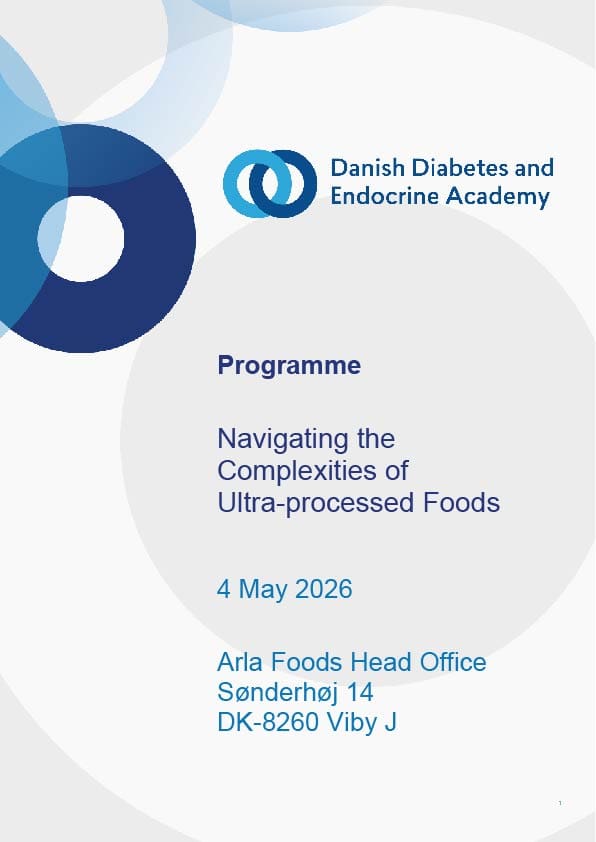
“Our ambition was to build the programme for the upcoming DDEA event Navigating the Complexities of Ultra-processed Foods so that it moves beyond simple ‘UPFs are good or bad’ narratives,” says Jensen, who is part of the organising committee. “Instead, we ask mechanistic questions.”
These mechanistic questions include how ultra-processed foods affect gut barrier integrity, microbiome composition and low-grade inflammation, and how this may translate into cardiometabolic risk over time.
Where These Questions Come Together
“Epidemiologists, clinicians, basic scientists, food technologists and regulators often look at the same products through very different lenses,” Jensen says.
Bringing these perspectives together is one of the central challenges in the field.
Across four sessions, participants will explore key questions such as how ultra-processed foods are defined, why foods are processed, and what current research suggests about health effects and underlying mechanisms.
“I hope participants leave with a more critical and more nuanced understanding of ultra-processed foods,” Jensen says. “Aware of the strength of the evidence, but also of the uncertainties and gaps.”
“If we can collectively refine the questions we ask in the next generation of studies,” he adds, “the symposium will have done its job.”
Ultra-processed foods are widely discussed, but the mechanisms behind their effects are only beginning to be understood.
Event Details: Navigating the Complexities of Ultra-processed Foods
Date: 4 May 2026, 10:15–17:00 Location: Arla Foods Head Office, Sønderhøj 14, 8260 Viby J, Denmark Registration deadline: 12 April 2026, 23:59
Odense University Hospital
Kløvervænget 6
Entrance 93, 8th floor
DK-5000 Odense C
+45 2964 6764
ouh.ddea@rsyd.dk
We use cookies on our website to give you the most relevant experience by remembering your preferences and repeat visits. By clicking “Accept all”, you consent to the use of all cookies. However you may visit Cookie Settings to provide a controlled consent. Cookie settings
This website uses cookies to improve your experience while you navigate through the website. Out of these cookies, the cookies that are categorized as necessary are stored on your browser as they are essential for the working of basic functionalities of the website. We also use third-party cookies that help us analyze and understand how you use this website. These cookies will be stored in your browser only with your consent. You also have the option to opt-out of these cookies. But opting out of some of these cookies may have an effect on your browsing experience.
Necessary cookies are absolutely essential for the website to function properly. These cookies ensure basic functionalities and security features of the website, anonymously.
Cookie
Duration
Description
cookielawinfo-checkbox-analytics
11 months
This cookie is set by GDPR Cookie Consent plugin. The cookie is used to store the user consent for the cookies in the category "Analytics".
cookielawinfo-checkbox-analytics
11 months
This cookie is set by GDPR Cookie Consent plugin. The cookie is used to store the user consent for the cookies in the category "Analytics".
cookielawinfo-checkbox-functional
11 months
The cookie is set by GDPR cookie consent to record the user consent for the cookies in the category "Functional".
cookielawinfo-checkbox-necessary
11 months
This cookie is set by GDPR Cookie Consent plugin. The cookies is used to store the user consent for the cookies in the category "Necessary".
cookielawinfo-checkbox-others
11 months
This cookie is set by GDPR Cookie Consent plugin. The cookie is used to store the user consent for the cookies in the category "Other.
cookielawinfo-checkbox-performance
11 months
This cookie is set by GDPR Cookie Consent plugin. The cookie is used to store the user consent for the cookies in the category "Performance".
viewed_cookie_policy
11 months
The cookie is set by the GDPR Cookie Consent plugin and is used to store whether or not user has consented to the use of cookies. It does not store any personal data.
Functional cookies help to perform certain functionalities like sharing the content of the website on social media platforms, collect feedbacks, and other third-party features.
Performance cookies are used to understand and analyze the key performance indexes of the website which helps in delivering a better user experience for the visitors.
Analytical cookies are used to understand how visitors interact with the website. These cookies help provide information on metrics the number of visitors, bounce rate, traffic source, etc.
Advertisement cookies are used to provide visitors with relevant ads and marketing campaigns. These cookies track visitors across websites and collect information to provide customized ads.